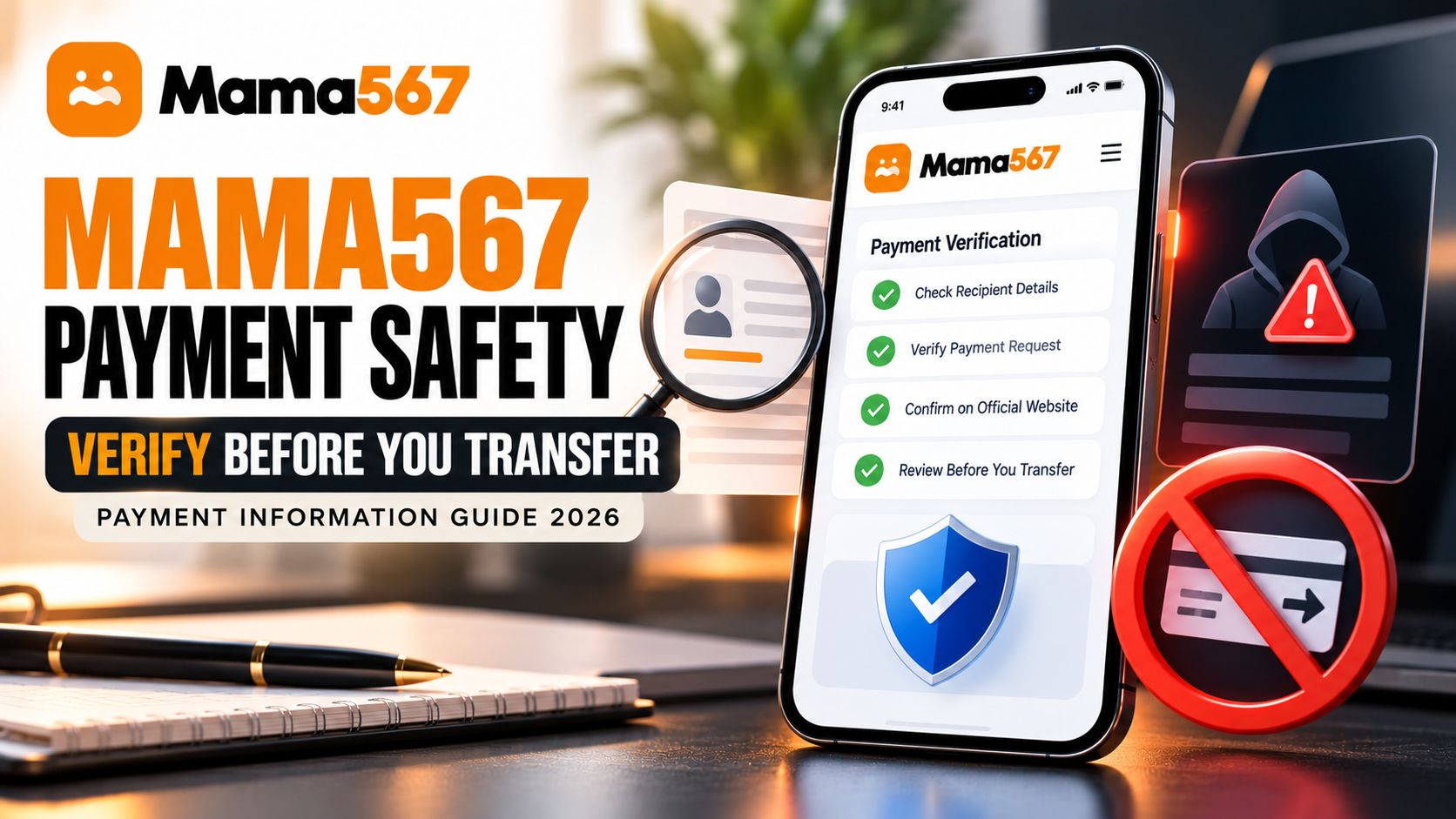
Instant payment systems like Unified Payments Interface (UPI), Immediate Payment Service (IMPS), and NetBanking make transferring money effortless across India. However, the speed and finality of these transfers have made them primary targets for digital impersonation and payment fraud.
Visitors exploring Mama567 often encounter conflicting statements across forums, social messaging apps, and third-party sites. Some unverified channels solicit payments, subscription fees, or direct UPI transfers while falsely claiming official affiliation. Transferring funds without independent verification exposes users to irreversible financial loss.
This guide clarifies Mama567 payment information, examines what the public website actually publishes, explains how to identify suspicious payment requests, and outlines essential consumer safety steps to keep your financial credentials secure.
For safe installation guidance, read our Mama567 App Download Guide. To learn how account credentials are protected, consult our Account & Wallet Security Guide. For details on transaction verification and timelines, see our Fast Withdrawal Guide.
What Payment Information Does Mama567 Actually Publish?
To evaluate payment claims effectively, users must distinguish between verifiable platform facts and unverified third-party claims. An audit of the current Mama567 website highlights several fundamental operational realities:
Published Informational Web Content
The public website at https://mama567apps.com/ is an open informational directory. As outlined in the official Terms & Conditions and Privacy Policy:
- Access to market charts, opening and closing results, Jodi panels, and historical archives is completely free.
- The web portal does not require or offer user account registration or login portals.
- The website contains no integrated payment gateways, checkout forms, merchant UPI handles, or deposit features.
- No fees, subscription plans, or VIP access charges are collected through the web platform.
Any website, messaging group, or individual claiming that you must transfer funds to access or unlock content on mama567apps.com is publishing false claims.
Documenting Content Inconsistencies on Legacy Pages
An objective audit reveals a discrepancy between the current read-only web portal and legacy reference material. Older informational pages, specifically the How to Play Guide, contain historical textual descriptions mentioning minimum deposit thresholds (₹100) and withdrawal windows (10:00 AM to 6:00 PM IST, minimum ₹500).
These legacy descriptions originated from historical mobile client specifications where manual reference entries were tracked, rather than active web-based payment processing.
Critical Distinction: The public website cannot and does not process financial transactions. Visitors must not assume that a payment method, banking integration, or wallet funding option is available simply because it appears in older website copy. Mama567 has no verified commercial payment gateway integration (such as Razorpay, Cashfree, or Stripe) on this website.
Legal and Regulatory Context
Under the Promotion and Regulation of Online Gaming Act, 2025 and the Promotion and Regulation of Online Gaming Rules, 2026, online platforms facilitating real-money gaming or betting transactions face strict legal obligations and prohibitions across Indian jurisdictions.
Mama567 does not publish deposit tutorials or provide instructions on funding real-money Matka wagering accounts. Facilitating unauthorized gambling transactions or promoting unverified deposit paths carries severe legal and financial risks. Payment functionality cannot be verified as lawfully cleared for real-money gaming transactions, and users should treat any claim of authorized deposit channels with extreme caution.
How to Recognize a Suspicious Payment Request
Payment scams generally rely on social engineering—manipulating urgency, fear, or curiosity—rather than breaching banking protocols. Fraudulent operators often impersonate customer support staff or platform administrators on private messaging apps.
Key warning signs of an unverified or fraudulent payment request include:
- Personal UPI Handles: Requests to transfer money to personal Virtual Payment Addresses (VPAs) rather than verified merchant business accounts.
- Unsolicited Direct Messages: Payment instructions received via Telegram channels, WhatsApp messages, SMS, or social media inboxes.
- Unfamiliar Payment Links: URLs redirecting to unofficial domains, spoofed banking interfaces, or prompting APK file downloads.
- High-Pressure Urgency: Demands that you transfer funds immediately to claim an alleged bonus or prevent account suspension.
- Credential Harvesting Demands: Requests asking for your One-Time Password (OTP), UPI PIN, NetBanking password, or card CVV.
- Remote Access Requests: Instructions to install applications like AnyDesk, TeamViewer, or RustDesk under the pretext of technical assistance.
- Guaranteed Returns or Tips: Promises that paying a fee unlocks "guaranteed winning numbers." As detailed in our analysis of Understanding Matka Odds and Probability, numerical outcomes are subject to probability and cannot be guaranteed.
- Bypassing Bank Alerts: Instructing you to ignore fraud warnings displayed by your bank or payment application.
UPI, NetBanking and Instant Transfers — General Safety Considerations
Instant payment systems process transactions in seconds. Once authorized, funds are moved immediately, making recovery difficult. Following basic payment hygiene protects your funds across all digital interactions:
1. The Core Rule of UPI: PIN Is Exclusively for Sending Money
A UPI PIN is entered ONLY to debit funds from your account. You NEVER need to enter a UPI PIN, password, or OTP to receive money, claim cashback, or accept a refund.
Fraudulent operators regularly distribute "Collect Requests" or QR codes labeled as "Refund Approvals." Scanning a QR code or entering your UPI PIN on these screens authorizes an immediate debit from your bank account.
2. Verify Payee Identity Before Authorizing
Always review the payment confirmation screen inside your banking or payment application (such as Google Pay, PhonePe, Paytm, or BHIM) before entering your PIN:
- Confirm the registered legal name of the payee displayed by the payment app.
- Check whether the payee carries a verified merchant badge.
- Ensure the transaction amount matches the intended figure exactly.
3. Never Disclose Authentication Credentials
Never share One-Time Passwords (OTPs), UPI PINs, NetBanking passwords, or debit card CVVs with anyone. Genuine customer care representatives, banking officers, and payment support teams will never ask for your authentication credentials.
4. Retain Transaction References (UTR)
Whenever you execute a digital transaction, save the payment receipt. The Unique Transaction Reference (UTR)—the 12-digit number generated by the National Payments Corporation of India (NPCI)—is the primary identifier banks and investigators require to trace payments.
What to Do If You Have Already Sent Money to a Suspicious Recipient
If you suspect you have transferred money to an unauthorized recipient or fallen victim to a transfer scam, act immediately to contain exposure:
1. Contact Your Bank Immediately
Call your bank's dedicated 24/7 fraud helpline without delay. Reporting within the initial hours increases the chance that your bank can coordinate with the beneficiary bank to freeze the recipient's account before funds are withdrawn. Provide the transaction timestamp, amount, and 12-digit UTR, and request an official dispute reference number.
2. Preserve Complete Evidence
Document all interactions related to the incident, including high-resolution screenshots of payment receipts displaying the UTR, complete chat transcripts, sender phone numbers, and URLs of suspicious websites or links.
3. Report to Official Cybercrime Authorities
In India, report financial cyber fraud through established government channels:
- National Cybercrime Helpline: Call 1930 immediately for real-time financial fraud intervention.
- National Cyber Crime Portal: Register a formal complaint at cybercrime.gov.in.
4. Beware of Secondary "Fund Recovery" Scams
Victims of online fraud are frequently targeted by secondary scammers claiming to be "ethical hackers" or "recovery agents" who demand advance fees to retrieve lost funds. Private entities cannot unilaterally reverse bank settlements; paying them only increases your financial loss.
How to Evaluate Payment and Refund Claims
Evaluating financial services requires separating marketing assertions from verified technical operations:
| Claim Type | Common Unverified Claim | Operational & Technical Reality |
|---|---|---|
| Instant Refunds | "100% instant refund guaranteed within 5 minutes." | Instant UPI and IMPS transfers cannot be reversed unilaterally. Refunds require recipient consent or formal banking arbitration. |
| Guaranteed Protection | "All payments are insured against loss." | Peer-to-peer transfers authorized with a valid PIN carry no commercial insurance against fraudulent deception. |
| Paid VIP Access | "Pay ₹500 to activate VIP direct server connection." | Mama567 publishes all market charts and results openly without charging fees or hosting paid servers. |
| Third-Party Recovery | "Our cyber agent will retrieve your lost money for a 10% fee." | Unauthorized private agents possess no legal authority to seize bank balances or reverse interbank settlements. |
Before conducting any financial transaction online, verify that the provider possesses a registered legal entity, verified commercial payment gateway integration, and transparent customer service channels. For advice on healthy boundaries and safe online habits, review our guide on Responsible Play and Safety.
Frequently Asked Questions
How can I verify a payment request claiming to be from Mama567?
Verify the request against official platform documentation. The public website at mama567apps.com operates strictly as a free informational chart service and never requests payments or UPI transfers. Any unsolicited direct message demanding money via personal UPI, WhatsApp, or Telegram is unverified and should be rejected.
Should I share an OTP or UPI PIN with customer support?
No. Never share an OTP, UPI PIN, banking password, or debit card CVV with anyone under any circumstance. Legitimate customer support staff, banking representatives, and payment gateways will never ask for your authentication credentials or security PINs.
What should I do if I transferred money to the wrong recipient?
Immediately contact your bank or payment application support to report the mistaken or unauthorized transaction. Provide the unique 12-digit UTR or transaction ID, preserve all communication records, and file a complaint through official banking dispute channels.
Does a payment screenshot prove that a transaction has been completed?
No. Digital payment screenshots can be easily manipulated or fabricated using image editing tools and fake receipt generator apps. The only valid confirmation of a completed transaction is an official entry in your bank account statement or verified in-app ledger.
How can I identify a suspicious payment link?
Look for warning signs such as mismatched domain names, unofficial URL shorteners, unexpected APK download prompts, urgent payment countdowns, or collect requests requesting your UPI PIN. Official banking pages utilize verified HTTPS security certificates matching your bank's recognized domain.
What should I do if a payment request cannot be verified?
Do not transfer any funds. Halt communication with the requesting party, block the contact, and report the handle to your payment provider or the national cybercrime portal. Genuine services provide transparent, verifiable documentation before requesting financial actions.
Conclusion
Protecting your finances online requires disciplined verification and strict credential security.
While Mama567 provides free informational charts and market results, the public website does not operate payment processing systems, collect subscription fees, or accept financial deposits. Any third party requesting money, advertising paid "prediction" tips, or distributing personal UPI handles operates outside official channels and represents an acute risk of fraud.
Keep these foundational rules in mind:
- Never enter your UPI PIN to receive money or accept a refund.
- Never disclose OTPs, banking passwords, or grant remote device access.
- Independently verify recipient identities before authorizing any transfer.
- Report unauthorized or fraudulent transactions to your bank and cybercrime authorities immediately.
By relying on verified facts rather than unconfirmed claims, you can safeguard your digital payments and avoid online transfer scams.
For the contact routes this site actually offers, and why no page here prints a support number, see How to contact Mama567 customer support.