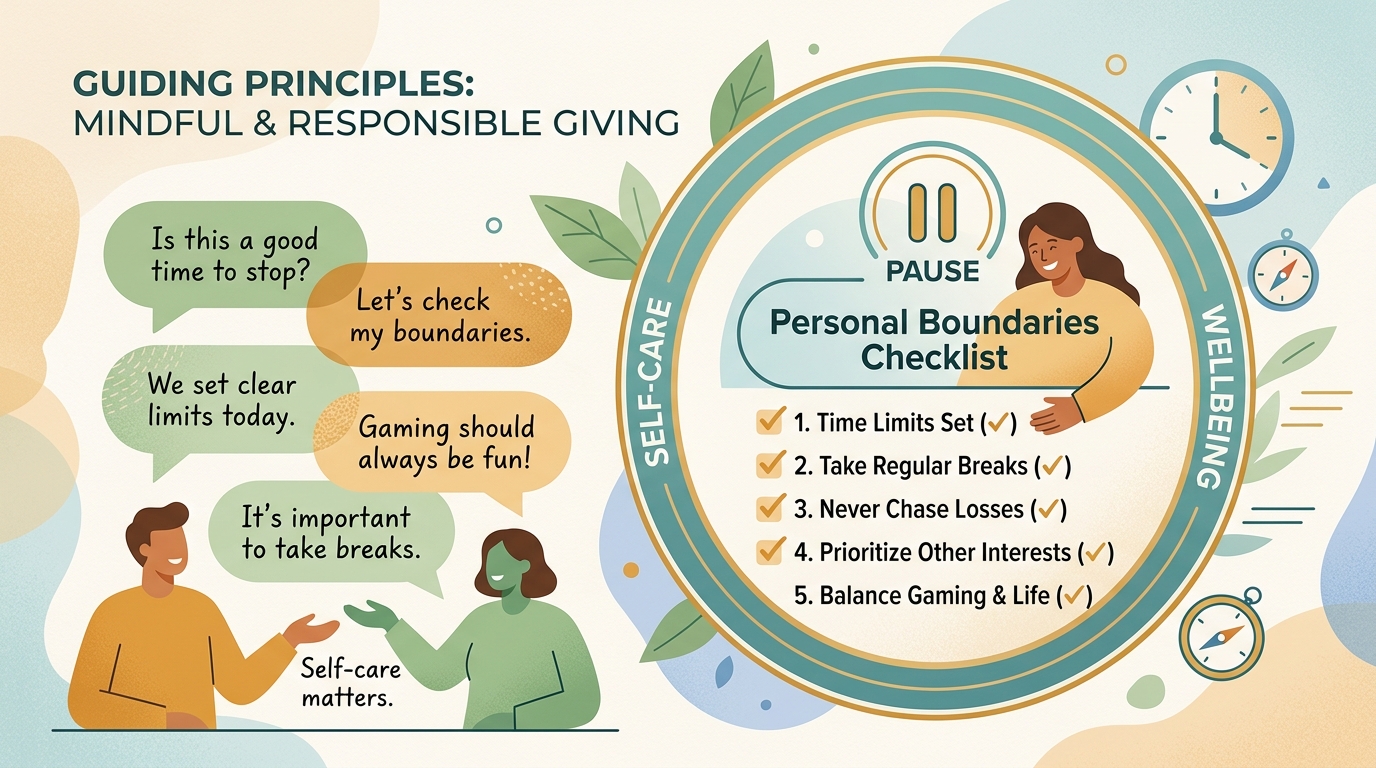
In discussions surrounding online gaming, lottery markets, and betting verticals, "responsible play" is often treated as a corporate slogan or a mandatory disclaimer tucked into a footer. However, genuine responsible gaming guidelines represent vital harm-reduction principles that protect individuals and families from psychological distress and irreversible financial harm.
Gambling activities—including number games and matka markets—carry an inherent mathematical house edge and total outcome unpredictability. Treating any game of chance as an investment vehicle, an income stream, or a solution to debt is a dangerous fallacy. Without strict self-regulation and clear personal boundaries, recreational participation can rapidly escalate into compulsive behavior.
This guide explores evidence-based practices for maintaining personal boundaries, outlines the critical warning signs of problem gambling, explains why borrowing money to recover losses leads to crisis, and provides direct avenues for professional assistance.
1. What Responsible Participation Can and Cannot Achieve
Before setting limits, it is essential to understand the realistic boundaries of harm-reduction strategies.
What Responsible Guidelines Can Achieve
- Containment of Financial Exposure: Restricting participation to pre-allocated, truly disposable funds prevents household essentials (rent, food, healthcare, education) from being jeopardized.
- Cognitive Clarity: Maintaining awareness of time spent prevents gaming from dominating daily routines or eroding work productivity.
- Early Intervention: Recognizing behavioral shifts allows individuals to step back before mild distress transforms into severe addiction.
What Limits Cannot Achieve
- They Do Not Ensure Profitability: A strict budget does not improve the mathematical odds of winning. Every game of chance has an expected negative return over time.
- They Do Not Prevent Loss: Even small, controlled wagers accumulate over weeks and months into substantial cumulative outlays.
- They Do Not Legalize Prohibited Activity: Satta matka is illegal across the vast majority of Indian states under the Public Gambling Act and state-level enactments. Adopting personal safety limits does not alter the underlying legal reality.
2. Why a Spending or Time Limit Is Not a Guarantee Against Harm
A widespread misconception is that setting a monthly deposit cap makes an individual immune to gambling-related harm. While limits are necessary, relying on them exclusively is insufficient for several psychological reasons:
The Velocity of Micro-Transactions
With instant mobile payment applications (such as UPI), small repeated transfers—₹100 or ₹200 at a time—create a phenomenon known as "payment frictionlessness." Because the brain does not register handing over physical currency, users often spend far beyond their intended daily ceiling without realizing it until reviewing their bank statement days later.
Emotional Strain Outlasts the Balance
Even when an individual stays strictly within a predetermined monetary limit, the emotional rollercoaster of near-misses, sudden losses, and obsessive result checking can cause acute anxiety, sleep disruption, and irritability. If checking draw timings or chart panels consumes your mental energy throughout the workday, the activity is causing harm regardless of the rupee amount spent.
3. Warning Signs of Loss Chasing and Impaired Control
Problem gambling rarely begins overnight; it develops along a recognizable behavioral continuum. The sooner an individual recognizes these red flags, the easier it is to pause or stop permanently.
| Warning Sign | Behavioral Manifestation | Underlying Risk |
|---|---|---|
| Loss Chasing | Immediately increasing stakes following a loss to "win back" lost money. | Exponentially accelerates capital loss; leads to severe debt. |
| Time Distortion | Losing track of hours; staying up late to watch evening market declarations. | Sleep deprivation, neglected family obligations, reduced job performance. |
| Secrecy & Concealment | Hiding bank statements, deleting browser history, or lying about finances. | Destroys interpersonal trust; isolates the individual from support systems. |
| Preoccupation | Constantly calculating numbers, studying past charts, or feeling anxious when offline. | Compulsive mental absorption; detachment from real-world interests. |
| Irritability on Pausing | Experiencing restlessness, mood swings, or anger when attempting to cut down. | Early clinical indicator of behavioral addiction and dopamine withdrawal. |
If you or someone you know exhibits two or more of these behaviors, take immediate steps to disengage. Learn more about identifying psychological triggers in our comprehensive Responsible Online Gaming & Spending Limits Guide.
4. Why Borrowing Money to Recover Losses Is Catastrophic
Among all warning signs, borrowing money to fund gameplay represents the critical boundary where recreational engagement collapses into financial emergency.
The Debt Spiral
When individuals experience consecutive losses, cognitive biases—such as the belief that their luck "must turn around soon"—lead to desperate measures. Users frequently borrow from friends, max out credit cards, access instant personal loan apps, or divert employer funds.
- Compounding Interest: High-interest personal loans and credit card cash advances accumulate steep financing charges, turning a manageable loss into insurmountable debt.
- Escalating Psychological Pressure: When playing with borrowed capital, the emotional burden is magnified tenfold. This desperation impairs judgment, leading to reckless, high-risk bets that almost invariably result in total liquidation.
- Rule of Thumb: Never wager borrowed money. If you cannot afford to lose the amount in cash immediately, you cannot afford to participate.
5. Practical Steps: Taking a Break or Stopping Participation
If you find your engagement becoming stressful, take concrete, structural actions to interrupt the habit loop:
- Delete Transactional Apps: Remove mobile betting applications and shortcuts from your phone. Adding physical friction—requiring you to re-download or re-configure access—creates valuable pause moments to reconsider impulsive decisions.
- Implement Device-Level Blocks: Use website-blocking extensions, DNS filters, or digital wellbeing app timers to lock out gaming domains during vulnerable evening hours.
- Engage Financial Friction: Request that your bank lower your daily UPI transaction limit or disable international and e-commerce payment toggles on secondary debit cards.
- Step Away from Chart Checking: Cease checking daily opening and closing declarations. Endless chart analysis fuels the illusion of control and keeps the compulsive loop active. For an objective overview of how probability governs numbers, consult our guide on Matka Odds and Probability.
6. Discussing Concerns with a Trusted Person
Breaking the isolation of problem gambling is the most powerful catalyst for recovery. Because shame and guilt often prevent open communication, taking the first step requires courage:
- Choose the Right Person: Confide in someone who is empathetic, nonjudgmental, and dependable—such as a spouse, close friend, sibling, or counselor.
- Be Fully Transparent: Share the full financial picture without minimizing figures. Concealing half the debt prevents true resolution and often leads to relapse.
- Hand Over Financial Accountability: Consider temporarily handing over financial management or asking your confidant to review monthly bank statements with you until your habits stabilize.
7. Avenues for Professional and Community Support
You do not have to navigate recovery alone. Free, confidential, and professional resources exist to help individuals regain control of their lives:
National Support Services in India
- Tele-MANAS (Ministry of Health & Family Welfare): India’s 24/7 comprehensive mental health helpline provides free, confidential counseling in multiple regional languages.
Toll-Free Numbers:14416or1800-891-4416 - KIRAN Mental Health Helpline: A dedicated psychosocial support helpline operated by the Department of Empowerment of Persons with Disabilities.
Toll-Free Number:1800-599-0019
International Support Services
- Gambling Therapy: A globally recognized, multi-language service offering free live chat support, peer forums, and online support groups for anyone affected by problem gambling.
Website: gamblingtherapy.org - Gamblers Anonymous: A fellowship of individuals who share their experience, strength, and hope to solve their common problem and help others recover.
Website: gamblersanonymous.org
To review our platform's foundational position on safety, privacy, and informational boundaries, please read our dedicated Responsible Play & Safety Policy and our official Terms & Conditions.