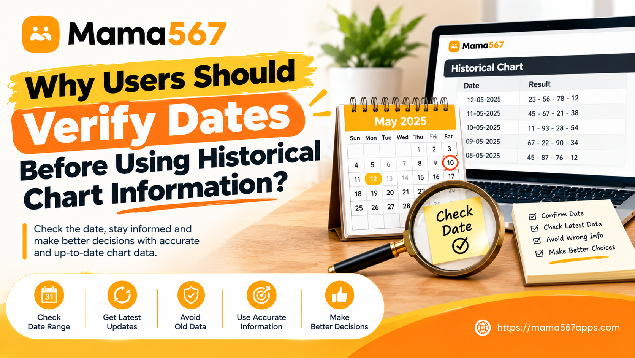
Information in historical charts is useful for allowing users to understand the manner in which previous outcomes are arranged. However, even the best-arranged chart might become misleading for the user if he tests the wrong date, fails to consider the range of dates, or compares data from different periods.
For those who are just getting started with using Matka Charts, Jodi Charts, and Pana Charts, date verification becomes one of the key steps in the right interpretation of historical data.
What Is Historical Chart Information?
Historical chart statistics refers to information of previously posted effects arranged through date, marketplace, or every other figuring out class. Online charts make those facts simpler to check with out looking through individual entries one by one.
A Matka Chart may additionally show effects in a weekly or date-based totally layout. Jodi Charts typically display -digit pairs, even as Pana Charts show three-digit mixtures. The genuine layout can vary, so readers should constantly take a look at the labels and date statistics furnished on the page.
Why Are Dates Validated?
The validation of dates allows users to be aware of which report is being read and whether or not both reports are comparable.
1. Prevent Mixing Up of Various Days
There are different entries in a chart, and these entries have different days. If you mistakenly compare last day’s outcome with today, you might end up confusing the days.
You should always validate the date title before interpreting any entry. It becomes very handy when dealing with charts that cover an entire week on a single page.
2. Compare Historical Records Correctly
When evaluating chart entries, both facts must seek advice from the intended dates and the same market. Otherwise, variations may additionally result from evaluating unrelated statistics as opposed to an actual correction or update.
For instance, if a Jodi access appears one of a kind on two pages, check whether each pages display the same marketplace and date before drawing any conclusions.
3. Identify Missing or Updated Information
Some online chart pages may additionally comprise blank cells or entries that seem later. Checking the date permit you to identify which document desires similarly rationalization.
A clean cell does now not automatically imply that facts is wrong. It can also reflect a result that has now not been declared, a non-working day, or facts that isn't displayed on that web page.
4. Reduce Misinterpretation
Historical information can be deceptive when dates, marketplace names, or chart codecs are overlooked. Verifying those information helps readers understand what the record clearly represents rather than making assumptions primarily based on incomplete statistics.
How to Verify Dates on an Online Chart Page?
Beginners can use the following steps when exploring historic Matka outcomes.
- Locate the date heading: Check the date shown above the relevant entry, row, or column.
- Confirm the marketplace call: Make positive the chart belongs to the market you supposed to study.
- Check the date variety: If the page covers a full week or month, affirm that the chosen duration consists of the specified date.
- Identify the chart format: Determine whether or not you are viewing a Matka Chart, Jodi Chart, or Pana Chart before decoding the numbers.
- Compare like-for-like facts: When checking entries, make certain they discuss with the equal marketplace and date.
- Search for replacement records: In case there appears to be a change in the outcome, try to find out whether there is a correction notice available.
- Clarify uncertain entries: If the date or result stays doubtful, seek advice from the website's available steerage in place of assuming the facts is accurate.
Common Date-Checking Mistakes to Avoid
Several small mistakes can lead to confusion when reviewing online chart records.
| Common Mistake | Why It Matters | Better Practice |
|---|---|---|
| Ignoring the date heading | An entry may be assigned to the wrong day | Check the date first. |
| Comparing different markets | Records may not relate to the same source | Verify the market name. |
| Overlooking the date range | The page may display an earlier or later period | Confirm the selected week or month. |
| Assuming a blank cell is an error | The result may not be available or applicable | Check the page's explanation. |
| Treating past patterns as predictions | Historical records cannot guarantee future outcomes | Use charts as records of past information. |
Exploring Historical Chart Information on Mama567Apps
Mama567Apps affords Matka-related chart statistics, including Jodi Charts, Pana Charts, and historic end result statistics. Readers interested by information those formats can start at the internet site's predominant page and use its to be had navigation to discover relevant chart statistics.
Visit Mama567Apps.Com to explore the available chart sections. You also can consult the Mama567 FAQ web page and its chart-studying manual for help information commonplace terms and chart layouts.
When reviewing any historical entry, verify the displayed date and market in place of counting on reminiscence or an remoted variety. If the website does no longer explain an obvious discrepancy, treat the access as unverified until in addition facts is to be had.
Conclusion
Verifying dates is a simple however crucial addiction while reviewing historical chart facts. By checking the date heading, market name, chart kind, and available update information, novices can recognize recorded entries extra truely and keep away from needless confusion.
Understand Matka Chart statistics via checking dates carefully and reviewing ancient information responsibly. Past consequences do now not guarantee future effects, and users ought to comply with all relevant local legal guidelines before attractive with associated sports.