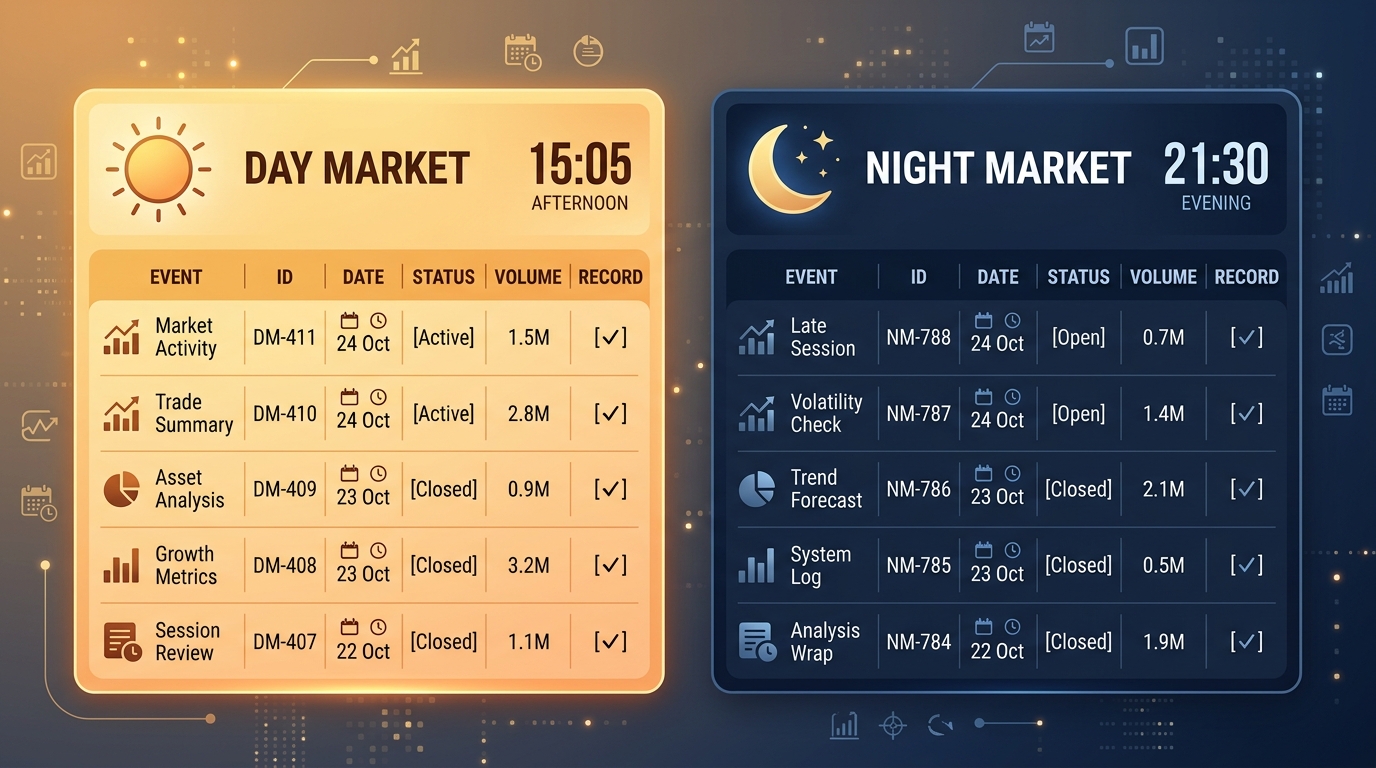
Among regular readers of satta matka market directories, comparing day and night sessions is a common point of interest. In particular, queries comparing milan day vs rajdhani night frequently appear in search trends. Because both markets rank among the most recognizable names in the industry, newcomers often wonder whether their rules differ, how their draw schedules are structured, and why their weekly chart grids look different.
Misconceptions abound on third-party forums. Some self-styled "guessing experts" claim that afternoon results directly influence evening declarations or that day markets employ different mathematical payout multipliers than night markets.
In reality, an objective review of verified platform data and market operational specifications reveals clear, documented distinctions. This guide provides a factual, side-by-side comparison of Milan Day and Rajdhani Night, examining their schedules, operational day structures, chart representations, and the independence of their declarations.
1. What the Two Names Identify in Verified Sources
In the official Mama567 market directory and backend feed:
Milan Day (milan-day)
- Category: Afternoon Day Market (Day Session).
- Identifier: API Code
MILAN_DAY(API ID5). - Core Role: One of the primary mid-afternoon reference markets, operating during the post-lunch trading hours.
Rajdhani Night (rajdhani-night)
- Category: Late Evening Night Market (Night Session).
- Identifier: API Code
RAJDHANI_NIGHT(API ID19). - Core Role: A flagship late-night reference market concluding before midnight, popular alongside Kalyan Night.
Both markets are cataloged in our comprehensive Markets Directory, each maintaining its own dedicated panel and historical records.
2. Documented Differences: Timings, Windows, and Operating Days
The primary documented distinctions between Milan Day and Rajdhani Night center on when they open, when they close, and which days of the week they run.
| Parameter | Milan Day | Rajdhani Night | Documented Difference |
|---|---|---|---|
| Open Time (IST) | 15:05 (03:05 PM) |
21:30 (09:30 PM) |
6 hours and 25 minutes apart. |
| Close Time (IST) | 17:05 (05:05 PM) |
23:45 (11:45 PM) |
6 hours and 40 minutes apart. |
| Session Window | Exactly 2 hours (120 minutes) | 2 hours and 15 minutes (135 mins) | Rajdhani Night window is 15 minutes longer. |
| Active Days | Monday through Saturday (6 days) | Monday through Friday (5 days) | Milan Day runs on Saturdays; Rajdhani does not. |
| Rest Days | Sunday only | Saturday and Sunday | Rajdhani Night observes a two-day weekend pause. |
| Session Type | Afternoon (Day) | Late Night | Day vs. Night session classifications. |
The Operating Day Difference
A frequent source of beginner confusion is looking for a Saturday result on the Rajdhani Night board. Because Rajdhani Night strictly observes a Monday-to-Friday schedule, Saturday rows are intentionally non-operational. Conversely, Milan Day operates on Saturday afternoons, only resting on Sundays. To explore all 19 monitored market schedules, see our Open & Close Timings Guide.
3. Mathematical Consistency: Shared Rules Across Different Windows
While their operating hours and active days differ significantly, their underlying mathematical and formatting rules are identical.
Both markets use the traditional eight-character format OOO-JJ-CCC:
- Open Pana (
OOO): A three-digit combination declared at the open cutoff. - Open Ank: The unit digit of the sum of the open pana digits (Sum Modulo 10).
- Close Pana (
CCC): A three-digit combination declared at the close cutoff. - Close Ank: The unit digit of the sum of the close pana digits (Sum Modulo 10).
- Jodi (
JJ): The two-digit combination uniting Open Ank and Close Ank in sequence.
Real Verified Examples from the Data Snapshot
Let us review real, verified records from the committed dataset for both markets:
Milan Day Verified Example (2026-09-14)
- Full Result:
330-63-355 - Open Pana:
330→ 3 + 3 + 0 = 6 → Open Ank is 6. - Close Pana:
355→ 3 + 5 + 5 = 13 → Unit digit is 3 → Close Ank is 3. - Resulting Jodi:
63. - Notice:
355repeats the digit 5, making it a double pana (displayed in red on the Milan Day Pana Chart).
Rajdhani Night Verified Example (2026-09-11)
- Full Result:
445-33-689 - Open Pana:
445→ 4 + 4 + 5 = 13 → Unit digit is 3 → Open Ank is 3. - Close Pana:
689→ 6 + 8 + 9 = 23 → Unit digit is 3 → Close Ank is 3. - Resulting Jodi:
33(a double jodi). - Both panas follow standard arithmetic exactly on the Rajdhani Night Pana Chart.
4. How to Compare Records Without Confusing Dates or Contexts
When evaluating historical archives, readers must avoid common comparison traps:
Trap 1: Assuming Cross-Market Correlation
A widespread myth suggests that a high-value jodi in an afternoon market (such as 63 in Milan Day) makes double jodis (such as 33) more likely in night markets. This is mathematically false. Milan Day and Rajdhani Night use separate physical or algorithmic draw mechanisms managed by different operator feeds. There is zero data linkage between an afternoon outcome and a night outcome.
Trap 2: Conflating Sister Markets
Do not confuse Milan Day with Milan Night, or Rajdhani Day with Rajdhani Night:
- Milan Day (15:05 to 17:05) and Milan Night (21:00 to 23:00) share the Milan name but run independent draws. For details on that specific pair, consult our Milan Day vs Milan Night Analysis.
- Rajdhani Day (15:05 to 17:05) and Rajdhani Night (21:30 to 23:45) also run independent draws with separate schedules.
Trap 3: Misreading Weekly Alignment
Because Milan Day has 6 active columns per week and Rajdhani Night has 5, placing their weekly tables side by side will show misaligned weekend cells. Always align by calendar date rather than row position.
5. What Cannot Be Established from Available Documentation
Objective data analysis also means recognizing the limits of what published data can prove:
- Draw Mechanism Details: The public feeds publish declared numbers; they do not reveal the internal mechanical or digital algorithms used by operators to generate outcomes.
- Predictive Patterns: Decades of aggregated chart history across both markets reveal no repeating sequence that can reliably forecast a future draw.
- Volume and Turnover: Public chart tables record declared winning numbers, not wagering volume, player counts, or operator revenues.
6. Summary and Practical Reading Tips
- Check the Clock: Remember that Milan Day settles before dinner (17:05 IST), while Rajdhani Night concludes shortly before midnight (23:45 IST).
- Check the Calendar: Never look for a Saturday result on the Rajdhani Night Jodi Chart; it is a 5-day market.
- Treat Numbers Independently: Study charts as historical records of what occurred, not as systems for predicting what will occur.
To explore how these markets fit into the broader landscape of Indian number games, consult our overview of Popular Matka Markets and review our guidelines on Responsible Play and Safety.